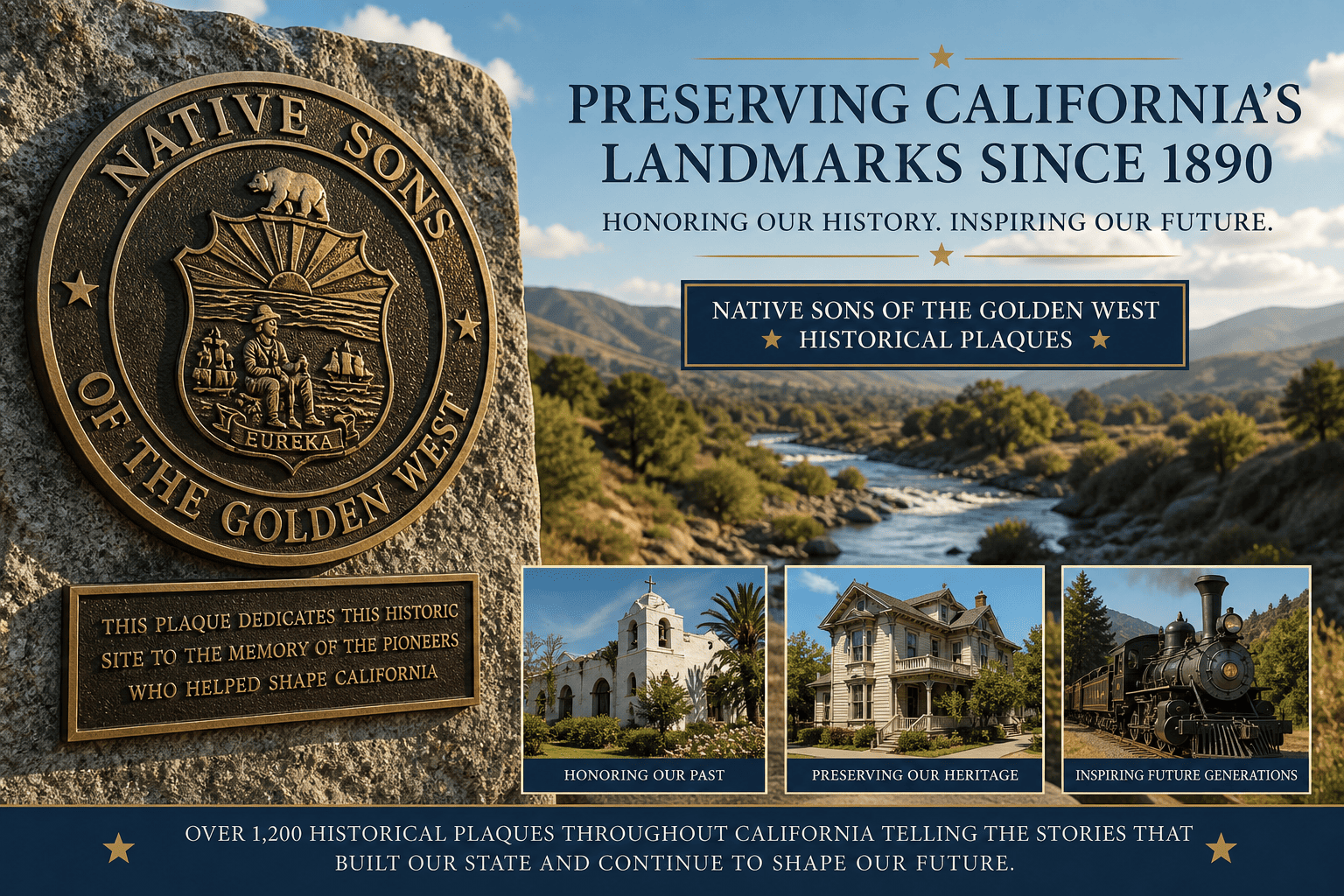
In the quiet corners of California, away from the neon lights of the cities and the rush of the freeways, history lives in bronze and stone. You may have seen them while hiking a trail in the Sierra foothills, walking the streets of old Monterey, or visiting a pioneer cemetery: the circular emblems of the Native Sons of the Golden West.
Since 1890, when the Native Sons of the Golden West placed their first historical marker to commemorate the discovery of gold at Coloma during the California Gold Rush, these plaques have served as more than just signs. They represent a lasting commitment to preserving the stories, people, and places that shaped the Golden State.
What Are Native Sons of the Golden West Historical Plaques?
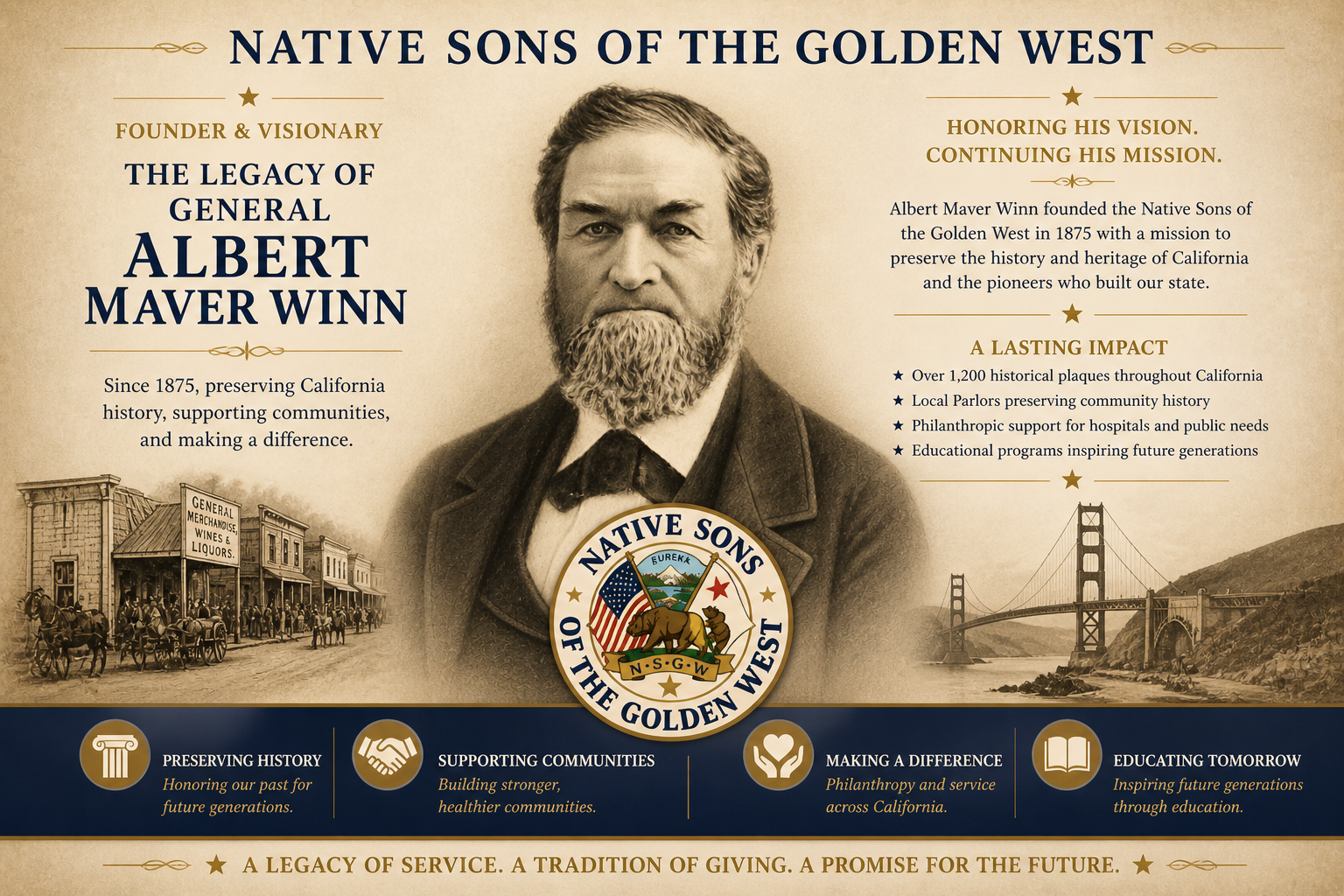
The Native Sons of the Golden West historical plaque program is one of the oldest and most extensive preservation efforts in California. Founded in 1875 by General Albert Maver Winn, the Native Sons of the Golden West created this program to ensure that important historical sites would be permanently recognized and remembered.
Today, there are more than 1,200 Native Sons of the Golden West plaques installed across California. These markers commemorate a wide range of locations, including:
- Gold Rush sites and early mining communities
- California missions and early settlements
- Historic homes, schools, and civic buildings
- Railroads and infrastructure built during westward expansion
- Sites connected to Native American and immigrant history
Each Native Sons of the Golden West plaque represents a carefully researched and community-supported effort to preserve California history in a tangible, accessible way.
The History of Native Sons of the Golden West Plaques
The Native Sons of the Golden West has long believed that California’s history is a living monument. While buildings may crumble and landscapes may change, a historical plaque ensures that the significance of a place is never lost.
From the early commemorations of the “days of ’49” to modern efforts recognizing overlooked communities, the Native Sons of the Golden West historical plaque program has evolved alongside the state itself. What began as a way to honor Gold Rush pioneers has expanded into a broader mission: documenting the full and diverse story of California.
This includes recognizing the contributions of Native Americans, immigrant laborers, and local communities whose histories were not always formally preserved in earlier generations.
Recent Native Sons of the Golden West Preservation Projects
Historical preservation is ongoing work. Across California, local Native Sons of the Golden West Parlors continue to restore, maintain, and dedicate new plaques that tell important stories.
The Auburn Chinese Cemetery Restoration
In Auburn, California, Auburn Parlor #59 has led a major effort to restore and honor the Auburn Chinese Cemetery. This site serves as the final resting place for Chinese immigrants who played a critical role in building California’s infrastructure during and after the Gold Rush.
For many years, the cemetery lacked formal recognition and proper maintenance. In late 2025 and into early 2026, the Native Sons of the Golden West contributed funding and volunteer labor to restore the cemetery’s shrine burner and maintain its historical markers.
This project reflects a broader shift in the Native Sons of the Golden West mission: ensuring that California history includes the voices and contributions of immigrant communities who helped shape the state.
The Rae House Dedication in Galt
In Galt, California, Elk Grove Parlor #41 recently celebrated the dedication of a Native Sons of the Golden West historical plaque at the Rae House, a preserved Queen Anne Cottage-style home.
Originally built in the late 19th century, the Rae House narrowly avoided demolition in the 1980s. Thanks to the “Save the Rae” campaign and the efforts of the Galt Area Historical Society, the home was restored and transformed into a museum.
On April 20, 2024, the Native Sons of the Golden West Grand Parlor officially dedicated the site with a commemorative plaque. The ceremony honored not only the Rae family’s legacy, but also the community effort that preserved a meaningful piece of local history.
Why Native Sons of the Golden West Plaques Still Matter Today
In a digital age where information is often fleeting, the Native Sons of the Golden West historical plaque program provides something enduring: a physical connection to the past.
A plaque invites people to stop, read, and reflect. It transforms an ordinary location into a place of meaning, offering context that cannot be fully replicated through a screen alone.
These plaques also serve important roles in:
- Education: Students, teachers, and researchers use these sites as real-world entry points into California history
- Tourism: Visitors seeking historic landmarks rely on plaques to discover meaningful locations across the state
- Cultural preservation: Communities can formally recognize their heritage and ensure it is not forgotten
By maintaining and expanding this program, the Native Sons of the Golden West helps keep California’s history visible, accessible, and relevant.
How the Native Sons of the Golden West Preserves California History
The Native Sons of the Golden West continues to adapt its historical preservation efforts to modern challenges.
Recent initiatives include:
- Partnering with organizations such as the California Landmark Foundation to replace stolen or vandalized plaques
- Expanding recognition of historically overlooked communities, including Native American and immigrant contributions
- Supporting restoration projects for neglected historical sites across California
- Encouraging community involvement in identifying and nominating new locations for commemoration
Through these efforts, the Native Sons of the Golden West ensures that California’s historical record continues to grow in both accuracy and inclusivity.
How You Can Support Native Sons of the Golden West Preservation Efforts
The work of the Native Sons of the Golden West is made possible by members, volunteers, and local communities throughout California.
If you are aware of a California historical site that deserves recognition, or a location that is falling into disrepair, you can help by bringing it to the attention of your local Native Sons of the Golden West Parlor.
You can also support preservation efforts by:
- Donating to the Native Sons of the Golden West Historical Preservation Foundation
- Participating in local restoration or cleanup efforts
- Joining a Native Sons of the Golden West Parlor in your community
Preserving California’s history is a shared responsibility. Every plaque placed today ensures that future generations will have a deeper understanding of the people and events that shaped the Golden State.